
INTRODUCTION
Operation Transformation hits our screens again shortly. Karl Henry and his sidekicks will make Joe Ordinary feel guilty for not losing their target weight or gaining 1lb in weight over the course of a week while we all look on disappointed for him/her. They will then increase the intensity of their exercise program the following week to get them back on track. The problem with using your bodyweight to measure success with an exercise program or a new diet plan is that it only tells part of the story. Your weight is just one piece of the jigsaw. You need all the pieces to see the full picture.
FAT LOSS v WEIGHT LOSS
When a client tells to me that they want to lose weight, in my head I know what they really mean is they want to lose FAT. Ask yourself if that’s true of you if shedding a few pounds is your goal? If a client loses 1lb of fat but gains 1lb of muscle their weight will stay the same but they have made a healthy change, right?
Seeing the number on the scales stay the same or increase can be frustrating, disheartening and demotivational for somebody trying to lose weight. DON’T LOSE HEART! There are so many reasons the number on the scales won’t change. They include (but are not limited to):
- Hydration Levels
If you are dehydrated you will weigh less than when fully hydrated as you have more water in your body
- Hormone Regulation
The stress hormone cortisol can cause fat gain1. Stress can be caused by physical, emotional or physiological factors such as illness.
- Nutrition
I’ve heard of people fasting the day of a weigh in!!! Sure, a belly full of Spag Bol will add weight but it won’t immediately make you fatter!
- Muscle Mass
Loss or gain of muscle mass will affect weight but a drop in weight due to a loss of muscle mass is a red flag and you should speak with your GP.
- Illness
Lack of appetite, vomiting, dehydration and inactivity will lead to weight loss for numerous reasons but that doesn’t mean the weight lost during a bout of flu is a good thing.
HOW WILL I KNOW IF MY WEIGHT LOSS/GAIN IS HEALTHY?
There are more reliable measures for fat loss (notice how I didn’t say weight loss) than the weighing scales and these include body fat testing and anatomical measurements.
- Body Fat Testing
The table below shows the recommended body fat percentages for men and women and can be found here: http://www.acefitness.org/acefit/healthy_living_tools_content.aspx?id=2 or simply save this picture by right clicking and “save as”.
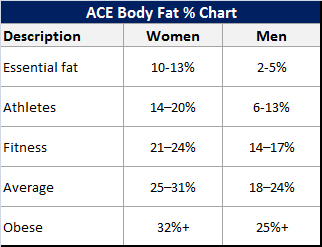 Picture: http://www.builtlean.com/2010/08/03/ideal-body-fat-percentage-chart/#fnref-1368-1
Having a skinfold caliper test performed can tell you how much fat your body has stored. A woman weighing 100kg with a body fat of 20% will have 80kg of lean tissue. If in 8 weeks you still weigh 100kg but have a body fat of 15% you KNOW that you have reduced fat and increased muscle mass. A good result all round! This short video demonstrates a skinfold caliper test.
- Anatomical Measurements
 Picture: http://bestweightlosshints.com/measuring-your-body-weight-fat-choices-other-than-the-bmi/
Have a gym instructor, a friend or even take the measurements yourself. All you need is a soft tape measure! Measure your waist (in line with the bellybutton), your hips (at their widest part – generally the widest part of your ass) and your upper arms (half way between the shoulder and elbow – no flexing). If you gain weight but are losing inches you know you are making progress!
CONCLUSION
Don’t just use your weight to determine whether or not positive body composition changes are happening. Get your body fat tested. Get your measurements recorded. Get all the pieces of the jigsaw together and you may see that the overall picture is more positive than one piece is letting on. Get in touch with me at markcaulfieldpt@gmail.com or comment with any questions.
References:
 markcaulfieldcoaching.ie