Hey!
Yes, you! How are you?
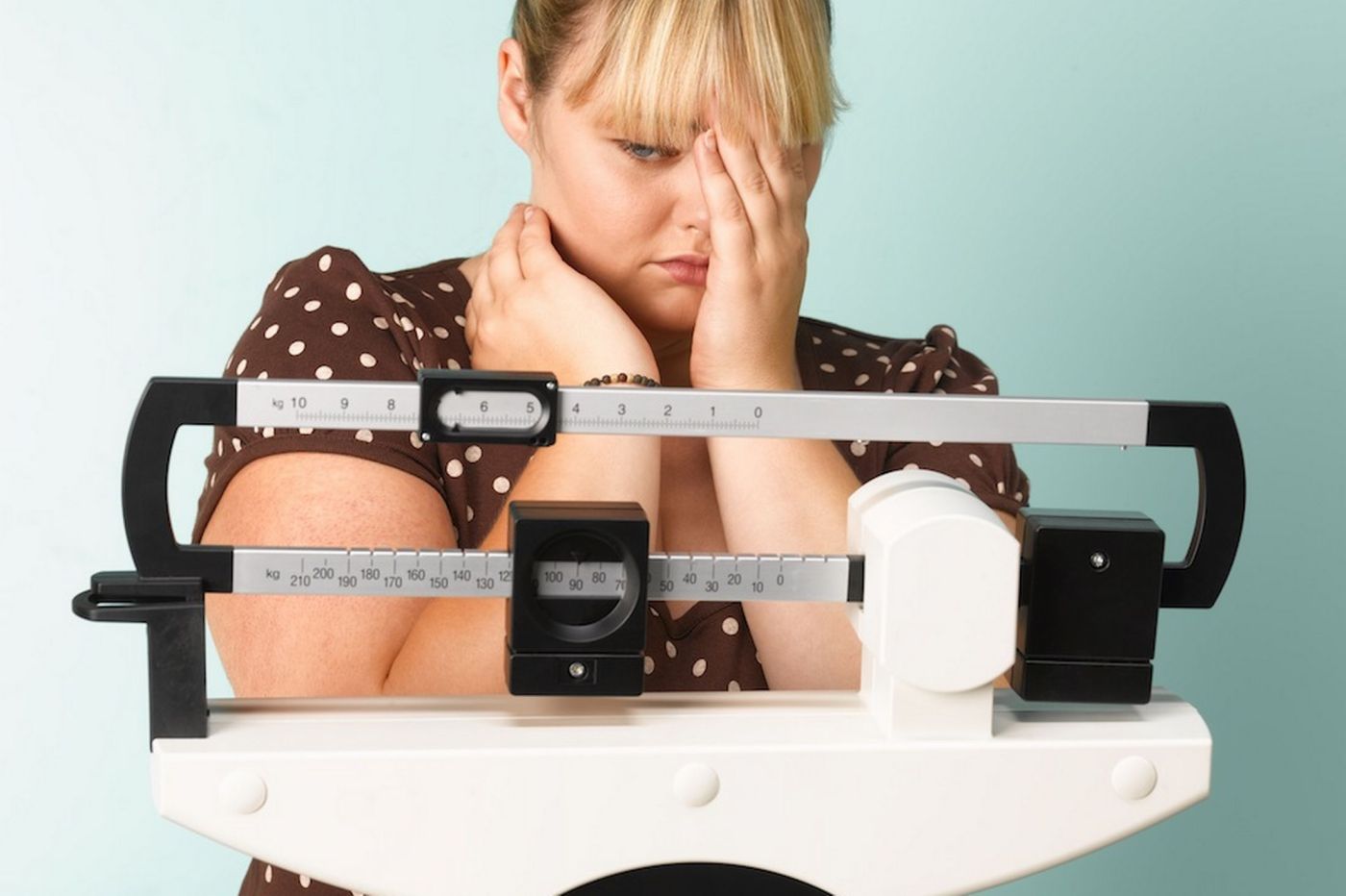
My name is Mark and I hate the scales. Now that you know a little bit about me let me explain a little bit more.
Firstly, for clarity sake I don’t hate the scale, I hate the way it is used.
When trying to lose weight……HANG ON.
When trying to lose FAT (that’s really what you want right? If you want to lose weight we can cut off your arm?? Woohoo I’ve lost 10lbs!!) the scales is usually the first point of reference.
You step on, knowing you won’t like the number, and step off determined to make a change.

And fair play to you for getting to that point. You’ve come out of denial because your favourite jeans don’t fit or you’ve seen a less than flattering picture of yourself eating a [insert your food choice here] and said “NO MORE”!
You make some healthier food choices over the next few days, say no to the odd indulgence, get out walking, buy a cookbook, some new shakers for those breakfast smoothies, a new pair of legging or trainers online (got a great deal) and even read some gym brochures and followed all the personal trainers in your area on Snapchat. Call off the search for me on Snapchat, I’m over 30.
A week later the scales tells you you’re down 3lbs!!!!
YES!! I. AM. A. F**KING LEGEND!!!!
I. DESERVE. A. TREAT.
This is where you have a glass (or 2) of wine or celebrate with a meal in your favourite restaurant. Dessert? Hell yes! I’m down 3lbs.
The following week, you’ve lost…..nothing. Hmmm. Minor blip. Motivation still strong.
The week after that, you’re up 1lb. The batteries must be going?
Another week on – no change.
Motivation is gone. F**k this. Diet and new lifestyle not working. To hell with this.
THIS IS WHY I HATE THE SCALE!!!
During the imaginary 3 weeks I’ve written about what you don’t get to see on a scale is your energy levels may be higher than ever, sleep is deeper, stress levels are reduced, productivity at work and at home are through the roof because your brain is less foggy , your heart and lungs are more efficient already at providing oxygen to working muscles so play time with the kids is easier (slightly! Where do they get their energy anyway!!??), your clothes are fitting a little looser and on top of all that your overall mood has improved.
NONE OF THAT GETS MEASURED ON A SCALE.
Your overall mass is made up of so much more than muscle and fat.
Every hair fibre, every molecule of food in your gut, every drop of blood WEIGHS something. Even the clothes you wear can have a bearing on the number the scale shines up at you (e.g a hoodie one day, underwear the next).
Here are 5 changeable factors that can affect your weight on the scale:
- Muscle Mass
- Fat Mass
- Hydration
- Stomach and Digestive Contents
- Hormones*
*your hormones don’t affect your weight directly, rather indirectly by affecting numbers 1-4 above depending on your physical, emotional and psychological environment.
And here is how each of these affect your weight on the scale.
MUSCLE MASS
We have all heard the phrase “muscle weighs more than fat”. That’s actually misinformed. Muscle is simply more dense so the same volume of muscle and fat will look completely different in size. See the picture below.
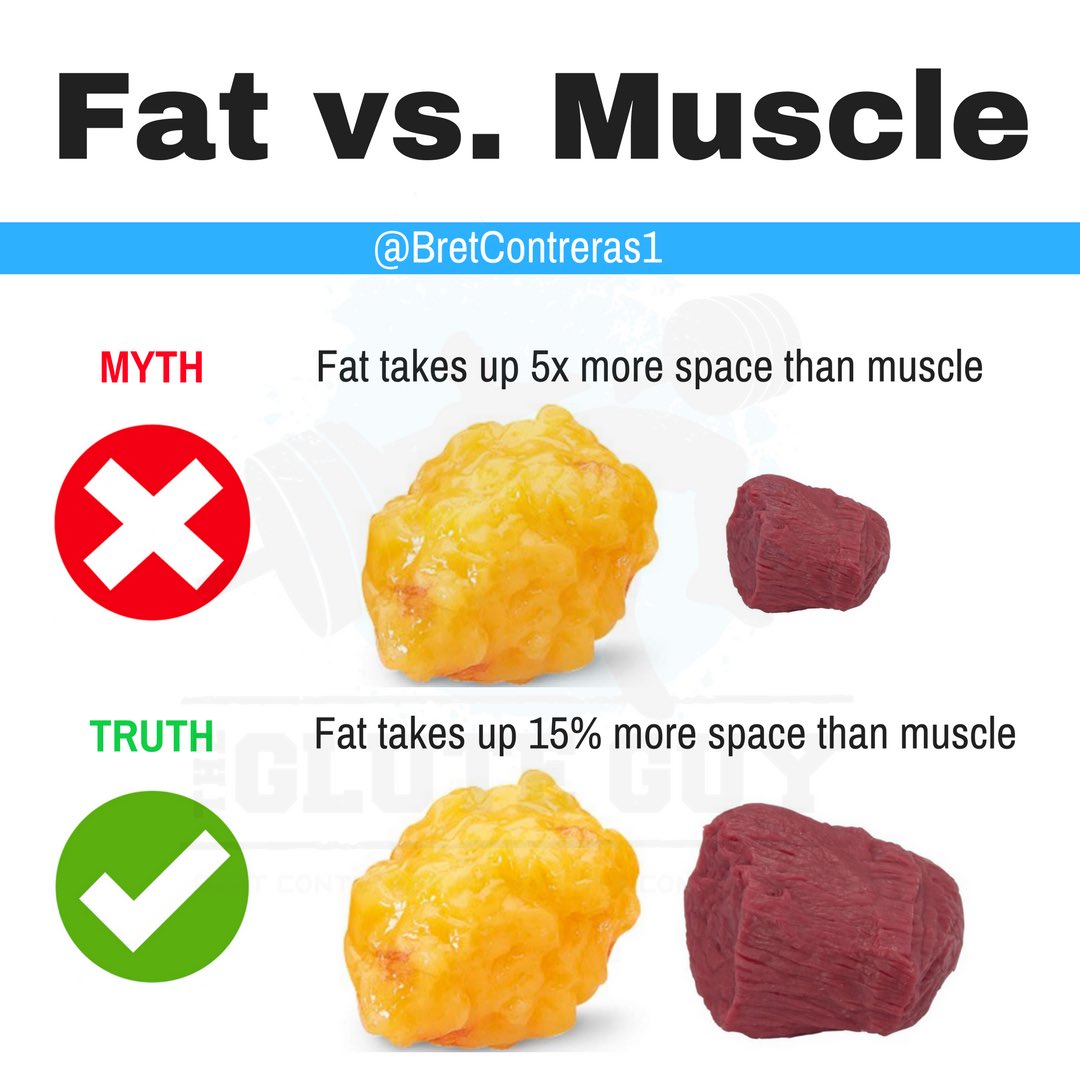
picture credit: https://twitter.com/bretcontreras
Weight training to increase muscle mass, if programmed and executed correctly, will promote muscle growth and therefore add to your scales weight. Muscle growth, also known as hypertrophy, will progress at different rates depending on your training, age, gender, hormone production, nutrition, recovery from workouts and sleep duration and quality.
Gaining new muscle mass takes consistent training and lifestyle choices that compliment this goal. I’ve heard stories of “slimming watcher” clients being told an increase “could be muscle” despite the person having never done weight training in their life. Seriously??!!!
Yes, adding muscle will see the scales go up but it isn’t as easy as just lifting the 2kg weights from the attic once in a while nor will it happen as fast as you may think for all the factors outlined above affecting the growth of new muscle tissue.
Adding muscle is a GOOD thing. Your muscles, connective tissues and bones will be stronger, your confidence may increase in and out of the gym, your metabolic rate will increase which is also excellent for fat loss and daily activities will become easier to complete.
Losing fat and gaining muscle at the same time is unlikely as you need a calorie deficit for fat loss and a calorie surplus to gain muscle mass.
FAT MASS

When you consume more calories than your body needs (calorie surplus), those extra calories are stored as body fat. Simple as that. Fat has mass. It will add to your scale weight.
When you consume less calories than your body needs (calorie deficit) your body will tap into your fat stores to make up the difference, hence, you lose body fat.
There you have it – eat less calories than you need until your body fat level is at a healthy level and the eat to maintain it.
Fat loss is simple, but it’s not easy.
Figuring out your metabolic needs is less an exact science and more a best guess. The Mifflin St Jeor equation is probably the most reliable. Here it is:
The Mifflin-St Jeor Equation is as follows:
|
For men: |
BMR = 10 × weight(kg) + 6.25 × height(cm) – 5 × age(y) + 5 |
|
For women: |
BMR = 10 × weight(kg) + 6.25 × height(cm) – 5 × age(y) – 161 |
As of writing this post my personal calculation looks like this:
BMR = 10 × weight(86) + 6.25 × height(182) – 5 × age(31) + 5
BMR = 860 + 1137 – 155 + 5 = 1847.
Your BMR is simply your baseline and does not tale into account your daily activities (housework, writing blogs, playing with the kids) or your exercise activities (gym sessions, heading for a run). These will add to your overall calories needs. A calorie deficit of 10-15% from what you need is achievable with small changes and wont leave you starving to a point you overeat or splurge on a high calorie treat and end up in a calorie surplus for that day.
Again, these numbers are estimates and should be revisited depending on results. If you drop calories slighlty and are consistently losing fat, no matter how slow, stick with it. If you are not losing fat despite a reduction in calories you will need to revisit the calculations and play by ear.
Whether you measure fat loss by taking measurements (waist, hips, arms), having a body fat caliper test administered at your local gym or get a DEXA scan at your local health park or sports science lab (yes, they can be expensive) the important thing to remember is that there is no guarantees and every aspect of your nutrition and exercise should be analysed to see if your plan is working.
HYDRATION

Our bodies are a whopping 55-60% water!!!! But even a 0.5% decrease in hydration can cause our heart to have to work harder. A 10% drop and you’re family are writing your obituary. It’s kind of important to stay hydrated!
Your weight will fluctuate depending on your hydration levels.
Place an empty bucket on a scale. Add water. It gets heavier. Your body is the same.
If you are dehydrated you will weigh less on the scale. If you are hydrated or over hydrated you may weigh more on the scale. Does this mean you have lost or gained muscle or fat. Probably not.
How will you know if you are optimally hydrated? Look at your pee. The lighter it is, the more water in your urine, the more hydrated you are. The darker in colour, the less water is in it, and you are in need of hydrating. Oh, and thirst. That’s your bodies way of saying “water, please”.
You get thirsty if slightly dehydrated or if you consume salty foods. Hence the peanuts and salt and vinegar crisps on sale in pubs. Salty food = thirsty customers!
Speaking of alcohol…..
Alcohol suppresses a hormone called aldosterone whose job it is to retain salt (sodium) in the body. When suppressed you will urinate more causing dehydration. The symptoms of your dehydration manifest as a hangover. Hangover symptom severity depends on amount of alcohol consumed and ranges from lightweight to “I feel grand”.
You will be fatigued, have a headache, be dizzy or faint, nausea and possible vomiting coupled with a rapid heart rate due to the extra workload on it pumping thicker blood due to reduced water content of the blood plasma.
The menstrual cycle can also play a role in water retention. Aldosterone interacts with sex hormones causing the female body to retain water. This leads to bloating, feeling sloshy, a general feeling of “bleugh” and, you guessed it – an increase on the scale!
Yet another reason why weekly weigh-ins won’t show a consistent reduction week after week. Understanding this and knowing that it’s NORMAL will play a big part in your attitude and ability to continue despite perceived set-backs.
STOMACH AND DIGESTIVE CONTENTS
I’ll keep this relatively short.
If you eat 3 meals (and excrete none of them) you will be heavier compared to eating nothing for 12-18 hours prior to a weigh in.
Starving yourself to see a 2lb drop is not progress.
Eating a big dinner prior to a weigh-in and seeing a 1lb increase is not a setback.
TOP TIP: You’ll sweat and feel very tired after a large meal because breaking down food creates heat and your body will want to shut down all non-essential processes and make you tired so it can concentrate on digestion #ChristmasDinnerNapScience
HORMONES

Our hormones play a crucial role in regulating things like hunger, satiety (feeling full – yep, your hormones “tell” you to stop eating!), fluid retention (as we mentioned above) breaking down fat for energy and our stress hormones will play a role too. We will focus on those for this part of the article.
When our stress hormones, namely epinephrine and norepinephrine, increase as a result of physical, emotional or psychological stress the signal the release of fat into the bloodstream in the form of fatty acids.
So stress increases, fatty acids get released into the bloodstream for the purpose of being used to produce energy, you burn off the energy and you lose body fat.
Not quite that easy.
Imagine for a moment you sit at a desk all day in a highly stressful job. Your stress hormones are high ALL day and those fatty acids are circulating in your bloodstream wondering when you’re going to use them for energy?
Thing is, you don’t.
You sit all day. Overeat at night. Repeat. Gain fat.
You see, you need to exercise to burn off those fatty acids or they just get recycled back into storage. Kind of like a substitute warming up all game but doesn’t get to play because he isn’t needed.
The second issue with high stress levels is that the stress hormones reduce your appetite and digestive function because as far as your body is concerned there are bigger fish to fry – the stressful stuff.
This is great if you are being hunted by a pack of wolves and eating and taking a dump aren’t on your to-do list right now but poor appetite while stressed leads to huge appetite or eating on auto-pilot when you get hangry. No typo, hunger + anger = hangry.
The problem with high stress levels is that if they are chronically high you may find yourself lacking energy to do any exercise after work. You’ve often heard of people saying they were energised after exercise or very “ugh” after a long day in work. Mad, that!
The key here is exercise. Exercise is the perfect supplement to stress. You burn off those fatty acids, boost energy levels and reduce your stress. Take that you pesky Kettlebell!!
THE BOTTOM LINE
When you decide to lose body fat, whatever the reason or method, realise that your weight on the scale is 1 part of a much larger jigsaw puzzle.
Take measurements, get your body fat percentage measured, take pictures at regular intervals, try on that 1 item of clothing that you REALLY want to feel comfortable in again and ask yourself how you feel.
Are your energy levels higher, are you more positive in your daily life, are you getting compliments more often and are you sleeping better, or longer?
One more thing – stop being so hard on yourself.
If you’ve made a start at improving your health keep it going because patience is the key now. One workout won’t make you fit and 1 ice-cream won’t make you gain fat.
Hopefully after educating yourself by reading this article and by SHARING it with a friend or foe you will realise that weight alone is variable, VERY variable.
TOO variable to be reliable.
Put all the pieces of the jigsaw together to see the big picture.
Thanks for reading.
Mark
PS Sorry if I went overboard on the GIF animations but they seemed like a nice break from the reading 🙂
TICKETS FOR MY NUTRITION FOR FAT LOSS TALK ARE AVAILABLE HERE: >>https://spiritleisurecentre.ie/nutrition-fat-loss-tickets/
 markcaulfieldcoaching.ie
Leave a comment