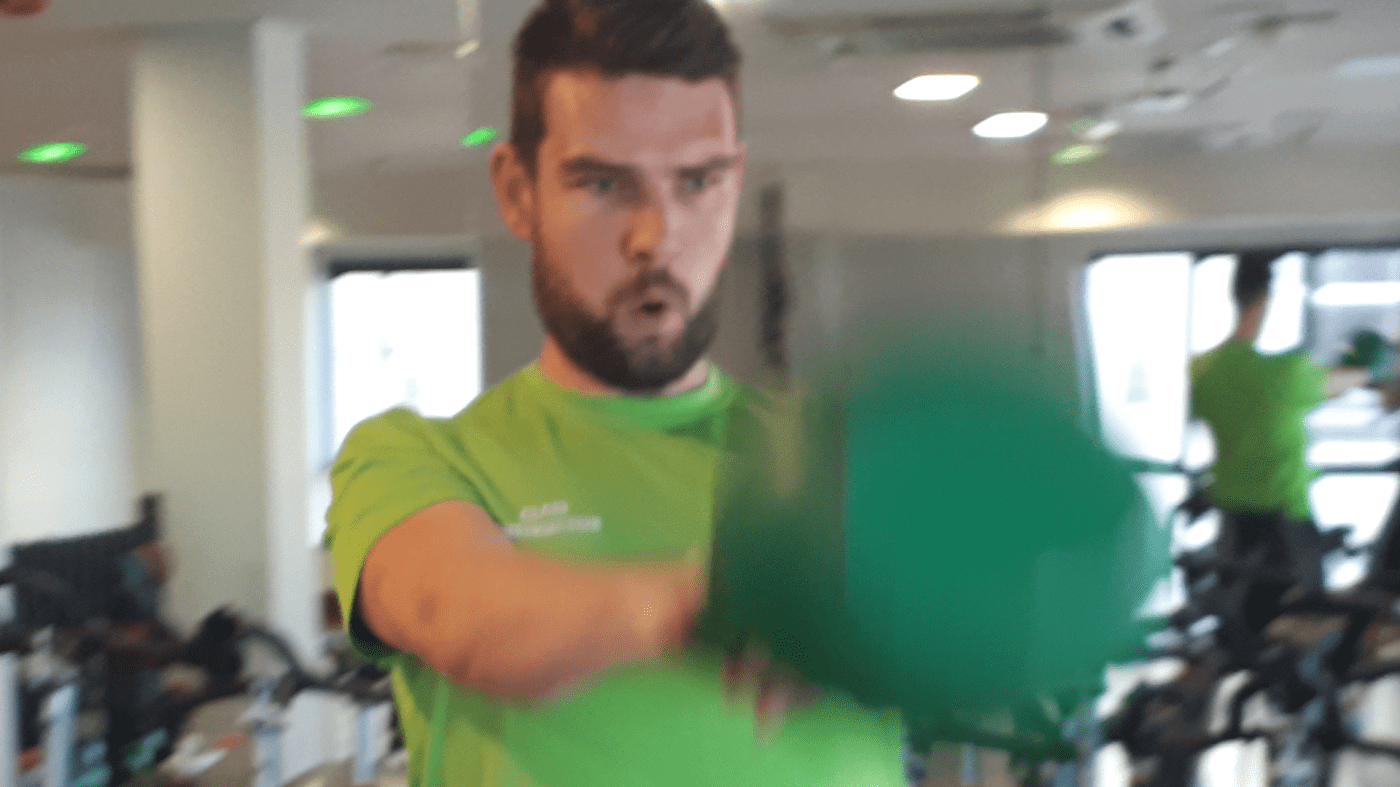
The Kettlebell Swing is an amazing exercise for the posterior chain of muscles (these are the muscles on the back of the body from the neck to the feet) with a particular emphasis on the glutes (bum) and hamstrings (back of thigh).
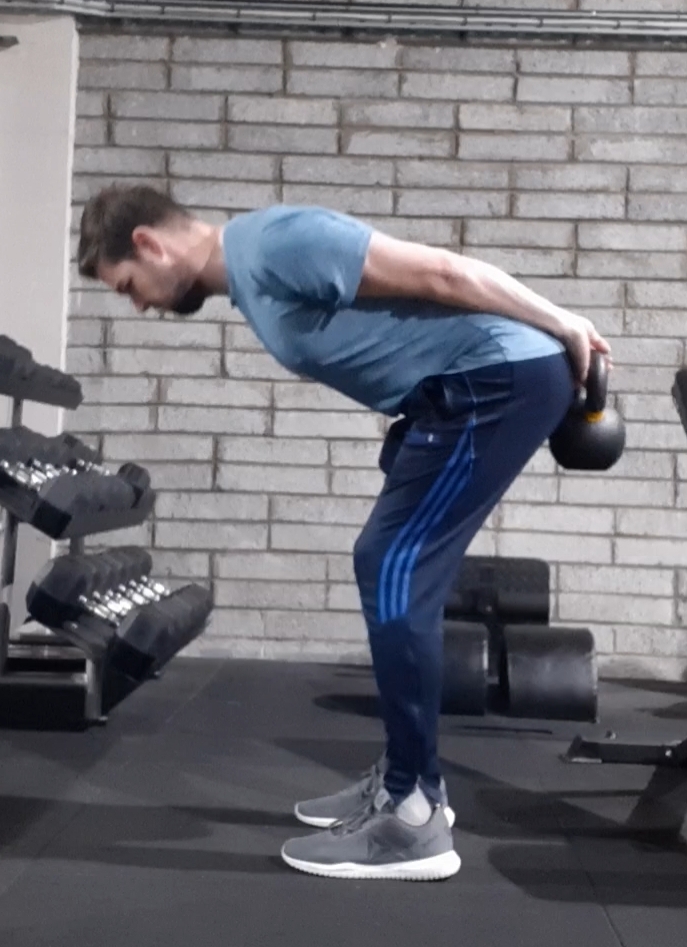
To target these muscles effectively you need to hinge at the hips. The picture below shows what this needs to look like. Bending (flexing) at the hip more than the knees.
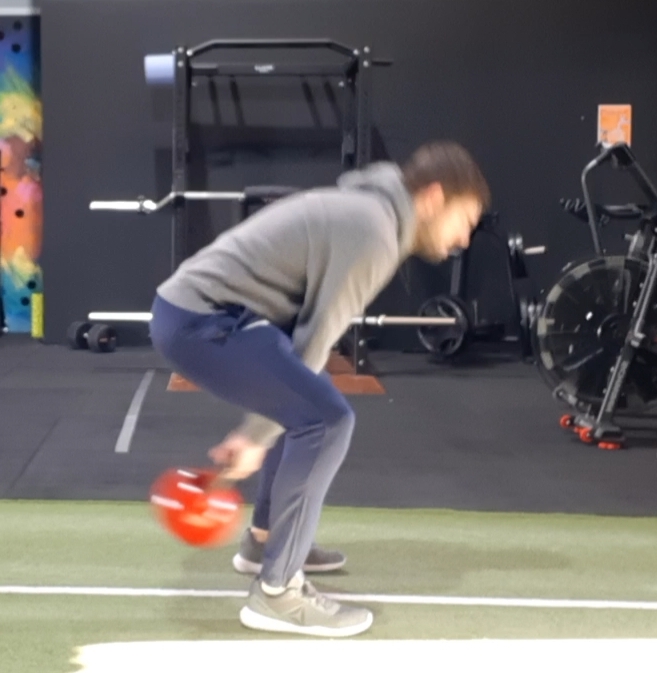
Unfortuntely a common Swing technique flaw is that the bell swings too low between the knees. This can cause you to squat into the swing which means bending more at the knees as in the picture below.
This has 3 main negatives:
1. Swinging too low can pull you into a rounded upper back posture. Not good.
2. This can also put extra loading on your spine. Not good, part deux.
3. We drive the bell with the hips. The further the bell from the hips the harder it is to swing. Not good return of the Jedi.
How do you fix it?
There is a very simple and effective way to help a client keep the bell closer to their hips.
Placing a knee height foam roller about a foot behind the body can be used to encourage keeping a higher path for the kettlebell.
This places the emphasis on the target area – the hips – and takes pressure off the spine, thighs and shoulders in the process.
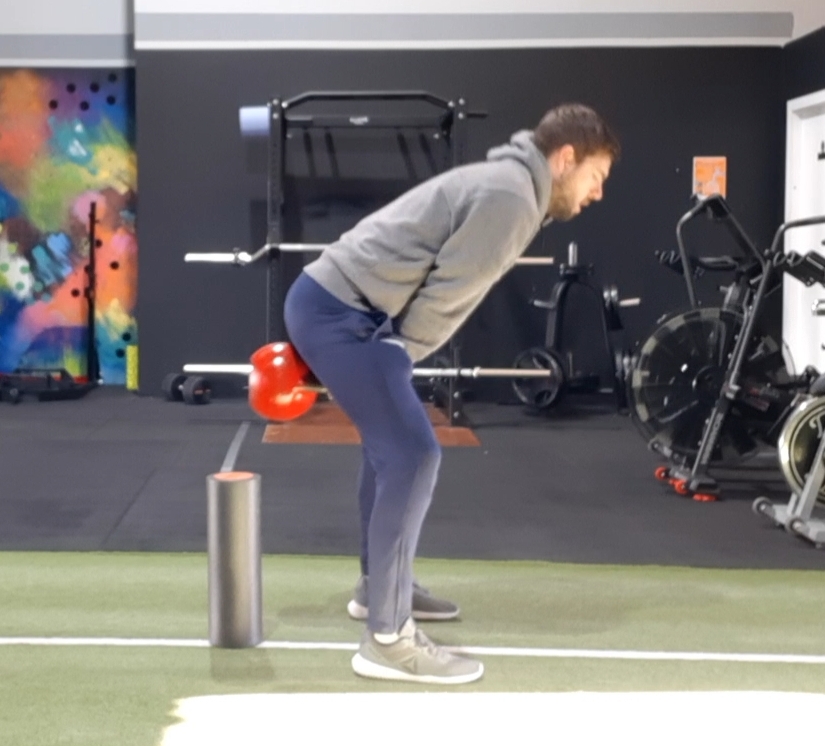
You can see from the picture above that the knees are only slightly bent and if they were to bend more, into a squatting movement pattern, and lowering the bell then the roller will be hit and fall over.
The video below demonstrates a low swing (not good), a good swing (good) and shows a low swing hitting the roller (not good part deux).
If this technique tip has helped you or a client of yours or you just think the content is useful the greatest compliment you can offer is to share this to your social media platform of choice and tag me so I can thank you for reading my content!
Swing on, my friends!
Mark
 markcaulfieldcoaching.ie
Leave a comment