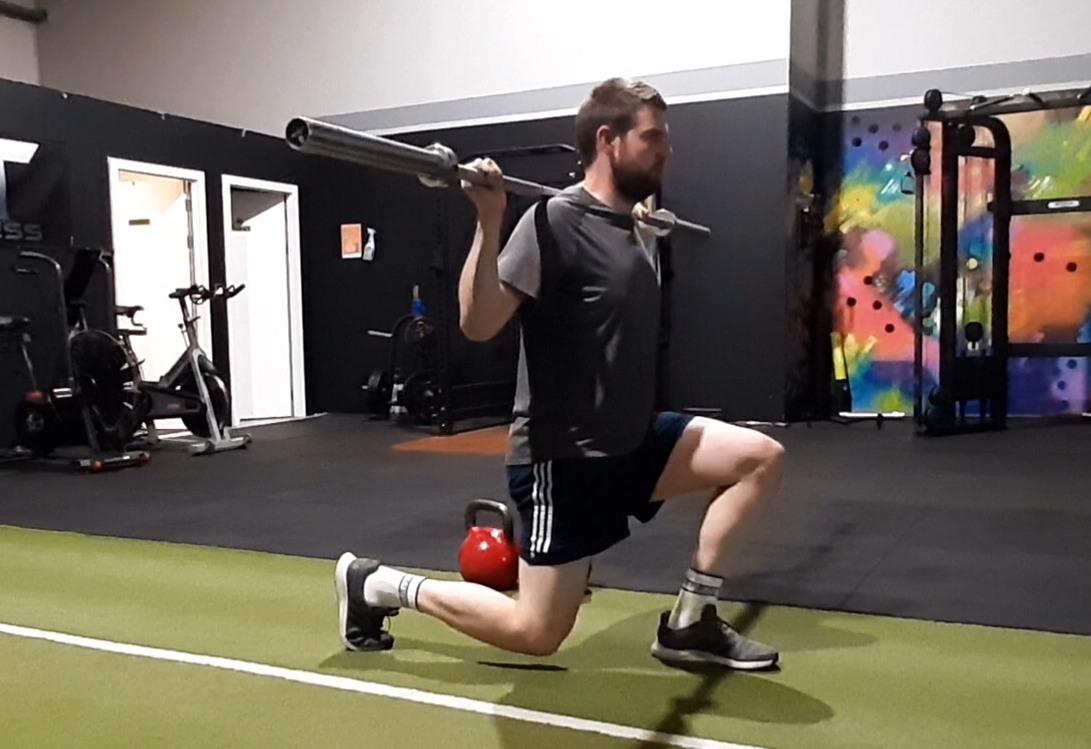
Forgive the title of this post. I actually really like Lunges and single leg exercises in general.
They identify imbalances in strength and coordination along with training balance. Both very useful to help avoid injury in sports and daily life.
Many people are obsessed with lifting HEAVY. I get it. There’s huge satisfaction in seeing iron-clad proof of your growing superhero strength. This post will show you ways to make Lunges more challenging without adding weight.
Ideal for those still training at home or simply wary of going heavier than what they are comfortable with right now, whatever the reason being.
1. Change the position of the weight.
A lower centre of gravity makes it easier to maintain balance. Holding the weight by your side is an example of this.

The same weight, in a position that changes your COG will place an additional challenge on your musculature. Here are 3 ways to do that:
A. Place weight in the Goblet position.

With your COG higher than with weights below the hips the core muscles must now stabilise much more to avoid your upper body from falling forward, leaning back or leaning side to side.
B. Offset the weight
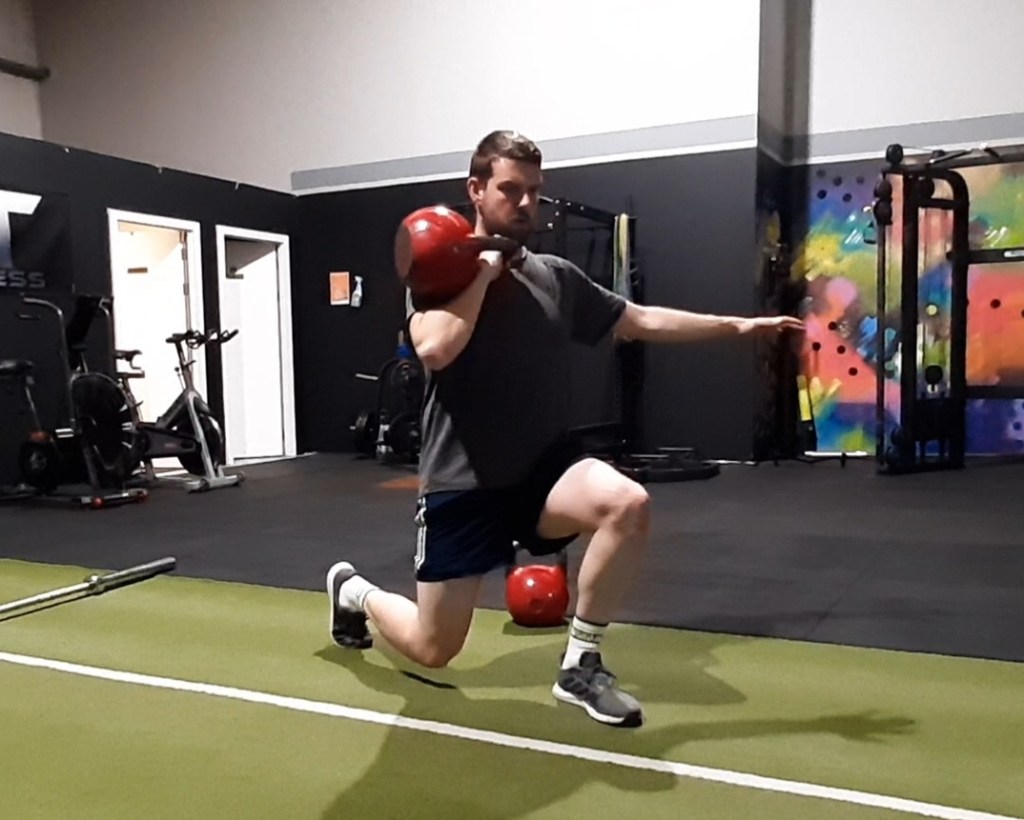
Holding the weight in the rack position, as pictured, on one side only again forces the core and hip muscles to stabilise the load and avoid losing balance.
C. Use a barbell

Using a barbell across the rear of the shoulders not only shifts the centre of gravity higher than the Goblet position it spreads the weight across a wider area placing extra emphasis on core stability to avoid leaning side to side.
The law of the lever applies here. The closer the weight is to its fulcrum (your spine) the harder it is to move. The further away the load the easier it is to move OR more challenging it is to NOT let it move.
2. Slow Down t’F*ck
The longer you spend performing an exercise the longer the muscle will be under tension and more challenging it is to perform the reps. Slowing down adds serious intensity. Check out this short clip to demonstrate:
3. Add Range of Motion
Elevating the front foot allows for more movement at the hip and knee joints thus moving the muscles and joints through a larger range of motion. More movement, similar to a slower tempo, adds intensity without the need to increase the weight.

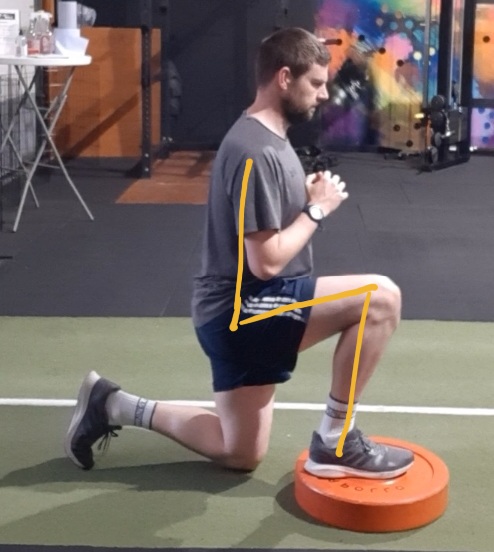
Elevating the front foot allows the back knee to move below the level of the foot leading to a lower hip and higher knee position. How low can you go?
If you read this far and enjoyed my post every like, share or comment is hugely appreciated. Thank you!
Mark
All the content in my blog is provided free of charge. If you found value in what you just read/watched please consider donating to the “Marks Children’s Hot Chocolate Fund”.
Choose an amount
Your contribution is very much appreciated, thank you!
Donate markcaulfieldcoaching.ie
Leave a comment